


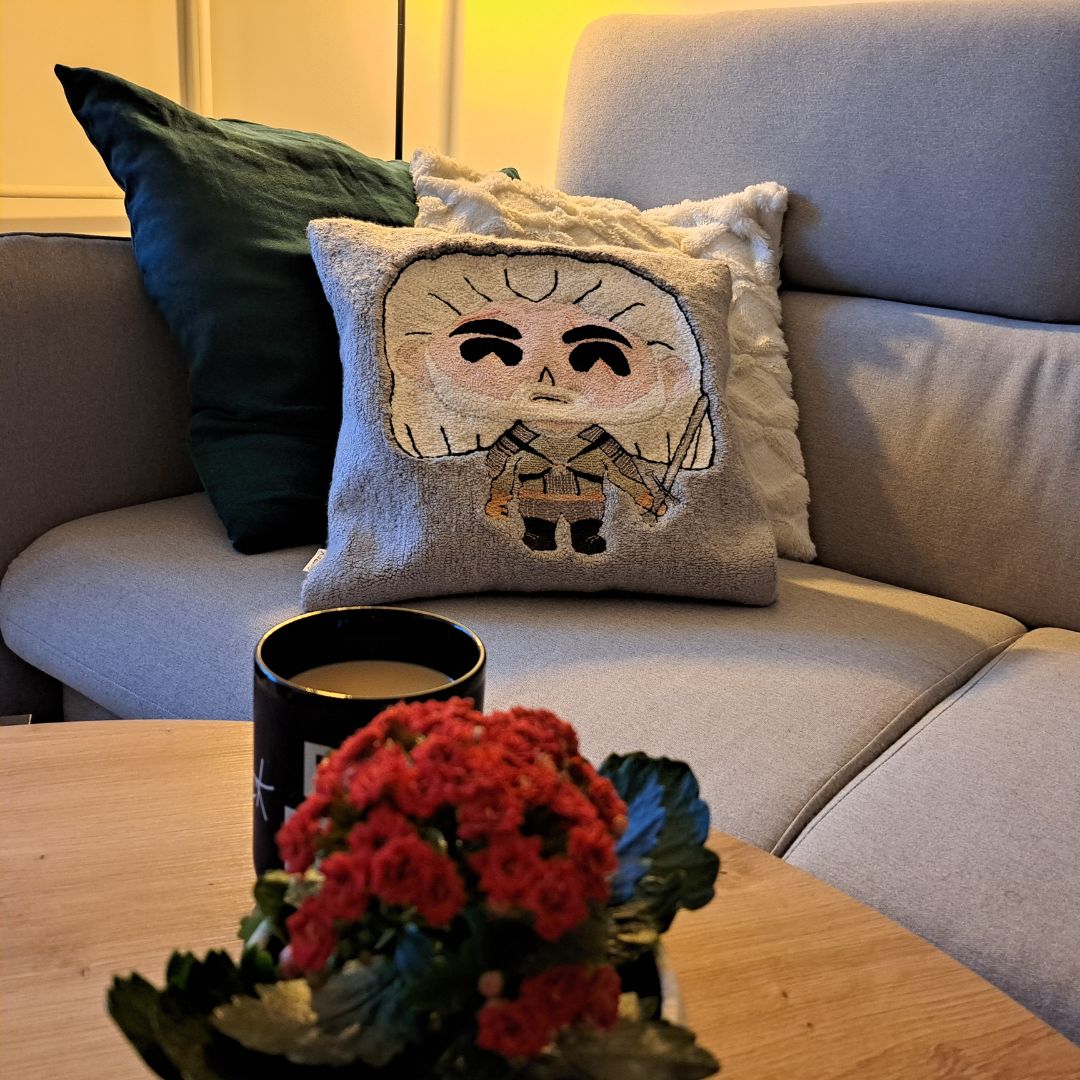
Is punch needle an expensive hobby? Here’s how my first embroidered pillow came to life
Once I got the hang of creating my first loops with the punch needle technique, brimming with pride at learning something new, I showed my first pieces to my husband.
They were small embroideries—just a few characters from games and anime—and that’s when we both agreed that since they turned out pretty well, it was time for me to try making my very first punch needle pillow. If you want to see how I transformed my little drawer-sized embroideries, check it out here—
Softness, character, and a personal touch—my vision for pillows
Why did I choose punch needle pillows as my main focus among so many possible handmade products? As a home decor enthusiast, I believe nothing adds softness, atmosphere, and a bit of soul to a space quite like pillows do. I wanted my punch needle creations to give that to others. I knew that for a pillow to be truly special, it had to tell a story, reflect personality, and ideally be closely connected to its owner—their passions or sense of humor.
A pillow that speaks louder than words—a gift for my husband
To surprise my husband, who’s a big gaming fan, I decided to create something special just for him. That’s how my very first punch needle pillow came to life—a depiction of The Witcher in Funko Pop style.
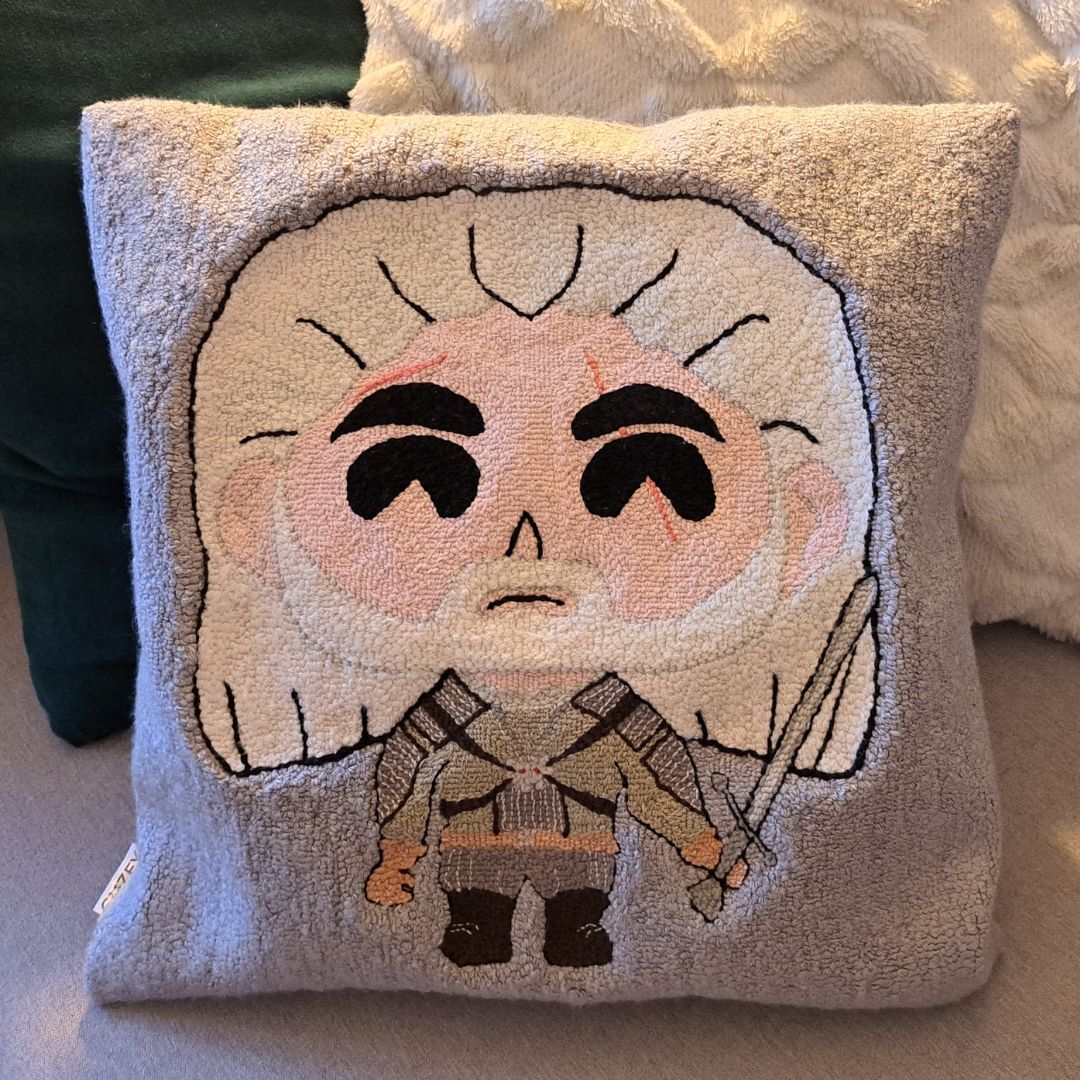
And a handmade pillow with a touch of humor perfectly matched my husband’s sense of humor, while also reflecting his interests and fitting right into his gaming corner’s decor.
Overcoming challenges—support and the search for essential materials
The hoops I had bought in a circular shape were completely unsuitable for this type of punch needle project, so I asked a friend for help. Her father, a carpenter by trade, made a sturdy 40 × 40 cm frame for me, which arrived at my home in just a few days. Back then, when punch needle was only slowly gaining popularity in Poland, access to materials was very limited. It was hard to find the necessary supplies—like a frame of the right size or punch needle fabric that was a bit more affordable than traditional monks cloth.
Drawing challenges and unconventional solutions
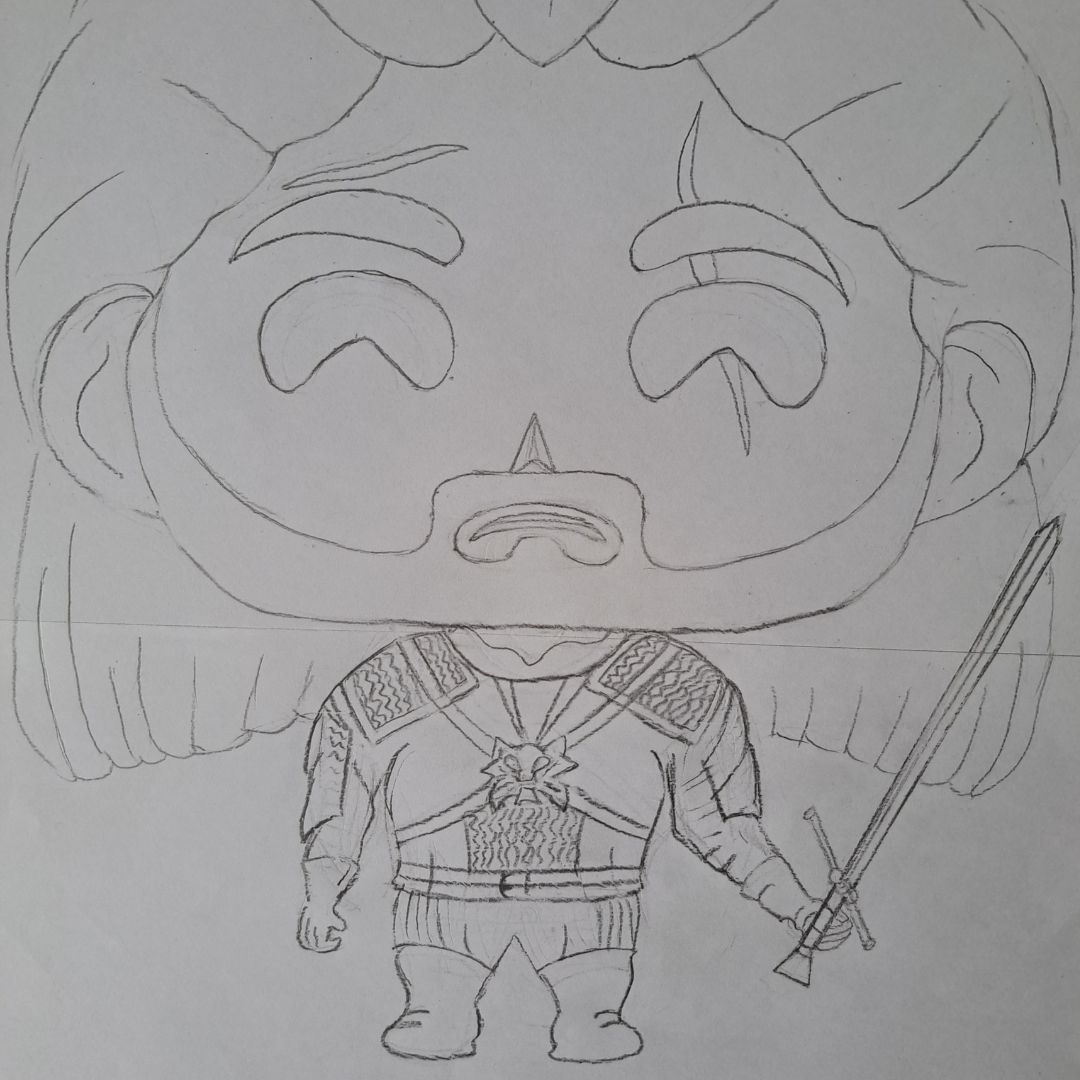
I set out to sketch Geralt, using reference images I found online. Not yet having proper tools like a graphics tablet, I drew with a pencil on two A4 sheets of paper, taped together. Once the sketch was ready, I realized that due to the amount of detail, I wouldn’t be able to transfer it directly onto the punch needle fabric, and not having a suitable fabric marker made things even trickier. So, I came up with an idea: I embossed the contour lines on paper, then traced them with a marker and transferred the design onto the fabric. It worked perfectly, and that’s how I was able to start my punch needle embroidery.
The path to the perfect frame and fabric—my experiences
At this stage of my punch needle journey, I didn’t want to invest too much in things I could initially do without. As I mentioned earlier, punch needle fabric was quite expensive and was my main priority. Back then, I didn’t yet know that you could work on other, cheaper materials, although finding a suitable alternative was also quite a challenge.
The saying that a well-stretched fabric on the frame is half the battle in punch needle embroidery is absolutely true. Without a specialized frame yet, I stretched the fabric and secured it to wood using a staple gun. It was a tedious process, because later I had to remove and reinsert the staples with each new embroidery. Over time, I realized I needed to look for a better frame.
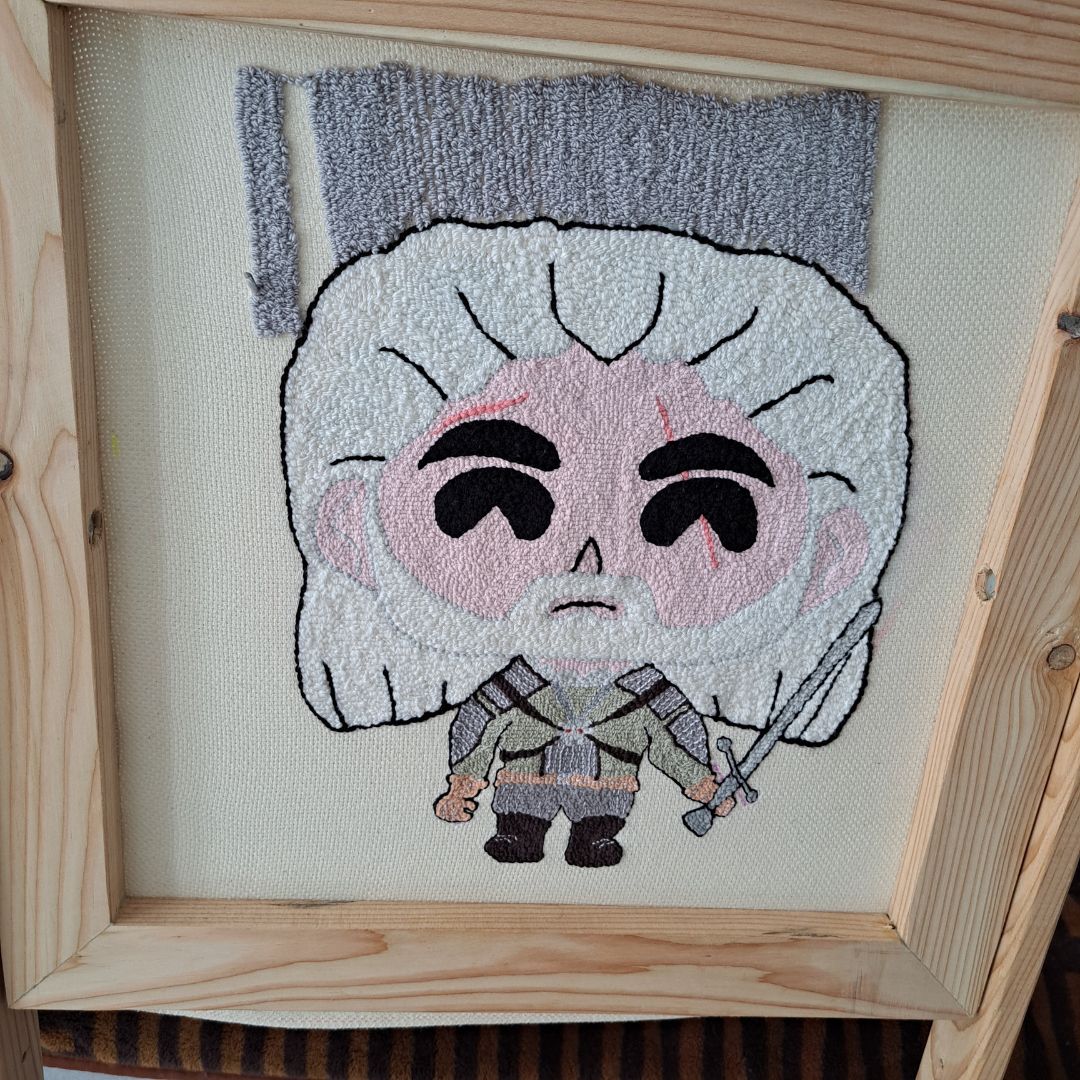
I found a plastic frame online, but it turned out to be a flop—the fabric quickly slipped, and the tension wasn’t stable anymore. Of course, that’s just my experience; others might get different results depending on various factors. In the end, I went back to my old, imperfect frame, which worked best for my punch needle projects.
When the idea exceeds your skills—my first collaboration with a seamstress
Next, I started creating the loops. Once the entire piece was covered with punch needle embroidery, I took the fabric off the frame and realized that the next part of the project would have to be done by a seamstress, because I didn’t know how to sew.
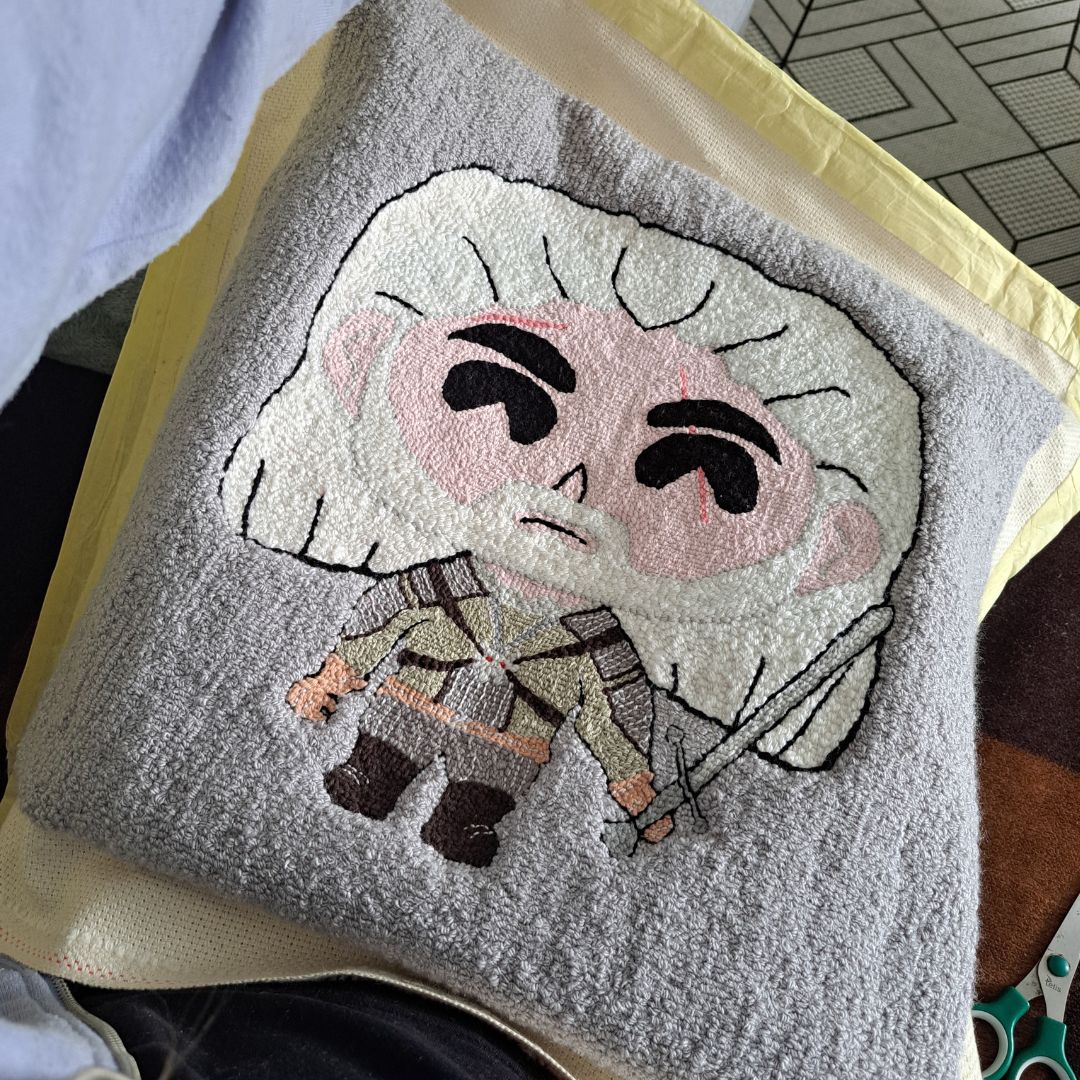
Yes, exactly—I decided to make my own pillow, not knowing how to work with a sewing machine. Hand-stitching it myself, without any knowledge of working with monk cloth, could have ended in disaster and ruined my project. I had already spent several days carefully inserting each needle, so I wanted to avoid that risk. I went to the nearest seamstress with my fabric and embroidery, asking her to make the pillow according to my vision.
A few days later, I got the message that the pillow was ready, and I asked my husband to pick it up. The price for the service seemed high at the time, but the most important thing was that from a piece of fabric and my punch needle embroidery, a handmade pillow was created—exactly as I had imagined, and perfectly matching my husband’s vision.
An unexpected blow that sparked a new flame
Unfortunately, things couldn’t be too perfect. When I started filling the pillowcase with the insert, I noticed something was off—the embroidery looked different, as if it had fused together. I realized that the seamstress must have used too high a temperature while ironing, damaging my punch needle embroidery. I was devastated. I had deliberately entrusted the completion of my project to a professional, only to face this unpleasant situation.
Despite my disappointment, my husband said the pillow was still amazing—one of the best gifts he’d ever received. That’s when something clicked inside me. I realized I wanted to make handmade pillows on demand more often, and that I wanted to develop my skills.
What happened next? Well— I bought a sewing machine and started learning to sew, so my punch needle pillows could be made entirely under my control.
Costs and the joy of creating—a punch needle summary
If I had to sum up whether punch needle is an expensive hobby, I’d say both yes and no. Sometimes all it takes is a bit of imagination, cleverness, and motivation to create something from scratch. Most specialized punch needle tools are just extras that speed up the process. However, if you want to invest in this hobby on a larger scale, it’s worth considering purchasing higher-quality materials. The joy of creating your own handmade pillows and punch needle embroidery makes all the costs and effort completely worthwhile.
Your turn!
Would you make your own punch needle pillow, or go for a ready-made one?
Do you think it’s better to splurge on fancy materials, or start with budget-friendly alternatives?
And which part of punch needle work do you find the trickiest?
Can’t wait to see you in the next post! :) Stay tuned for more punch needle fun!
FAQ – Punch Needle Edition
Is punch needle an expensive hobby?
It can be—both cheap and pricey—depending on the materials and tools you choose. Basic supplies are enough to get started, while higher-quality materials are great for bigger projects.
What do I need for my first punch needle pillow?
You’ll need fabric (like monk cloth, preferably a pillow cover with a zipper), an embroidery hoop, a punch needle, embroidery floss or wool, and a pillow insert. Extras like a fabric marker or precision scissors make things easier.
Do I need to know how to sew?
Not necessarily! You can ask a seamstress to help. But learning to sew means you can make your handmade pillows exactly the way you imagine.
How do I care for my punch needle pillow?
Hand wash or use a gentle cycle (max 30°C / 86°F). Avoid heavy rubbing so the yarn and embroidery stay intact.
Is punch needle a good gift?
Absolutely! Handmade pillows are unique, personal, and can reflect the recipient’s interests. Plus, they’re practical and super decorative!
 Log in with Google